HerWay

Agreements,not arguments.

HerWay turns chores, habits, and shared promises into clear agreements that share the mental load. You agree on what needs doing, and the app handles the reminders.

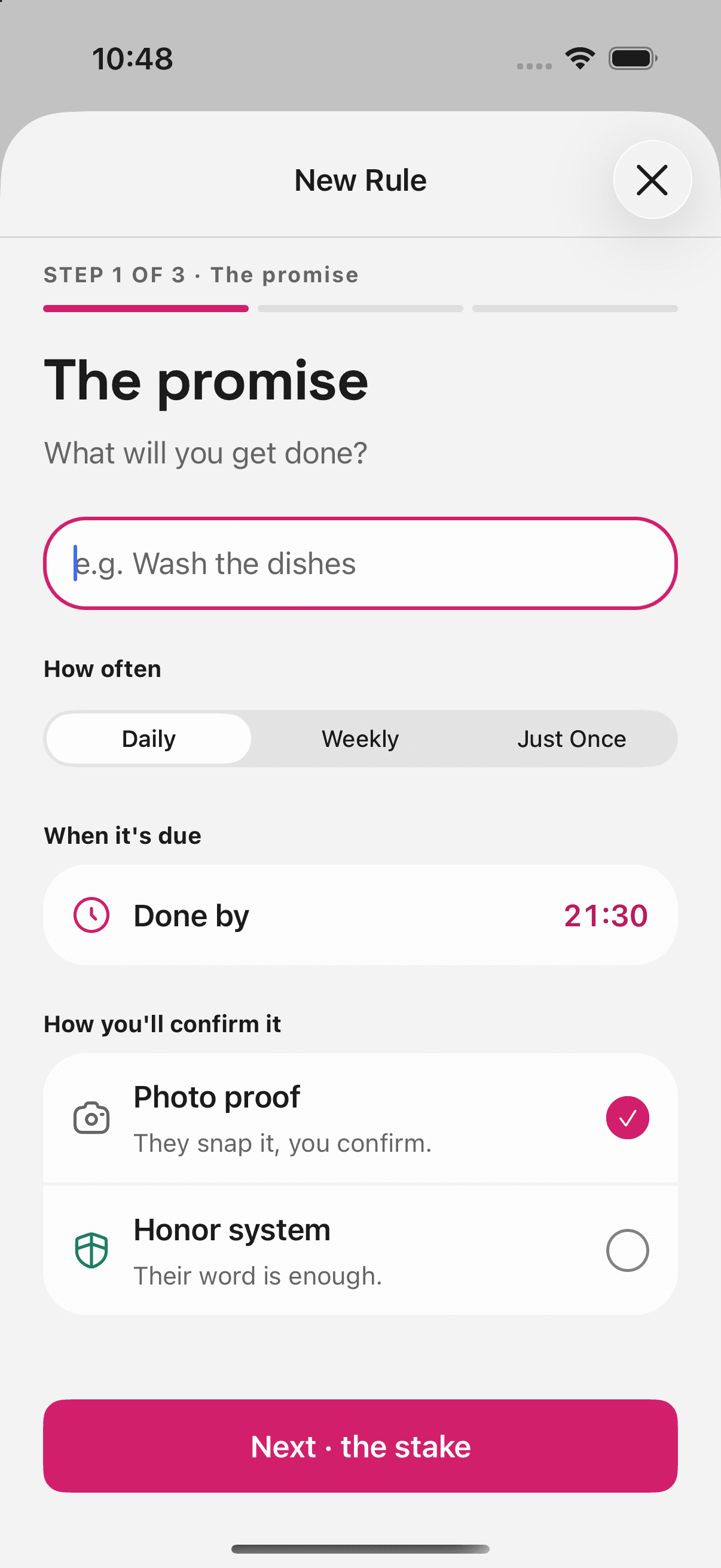
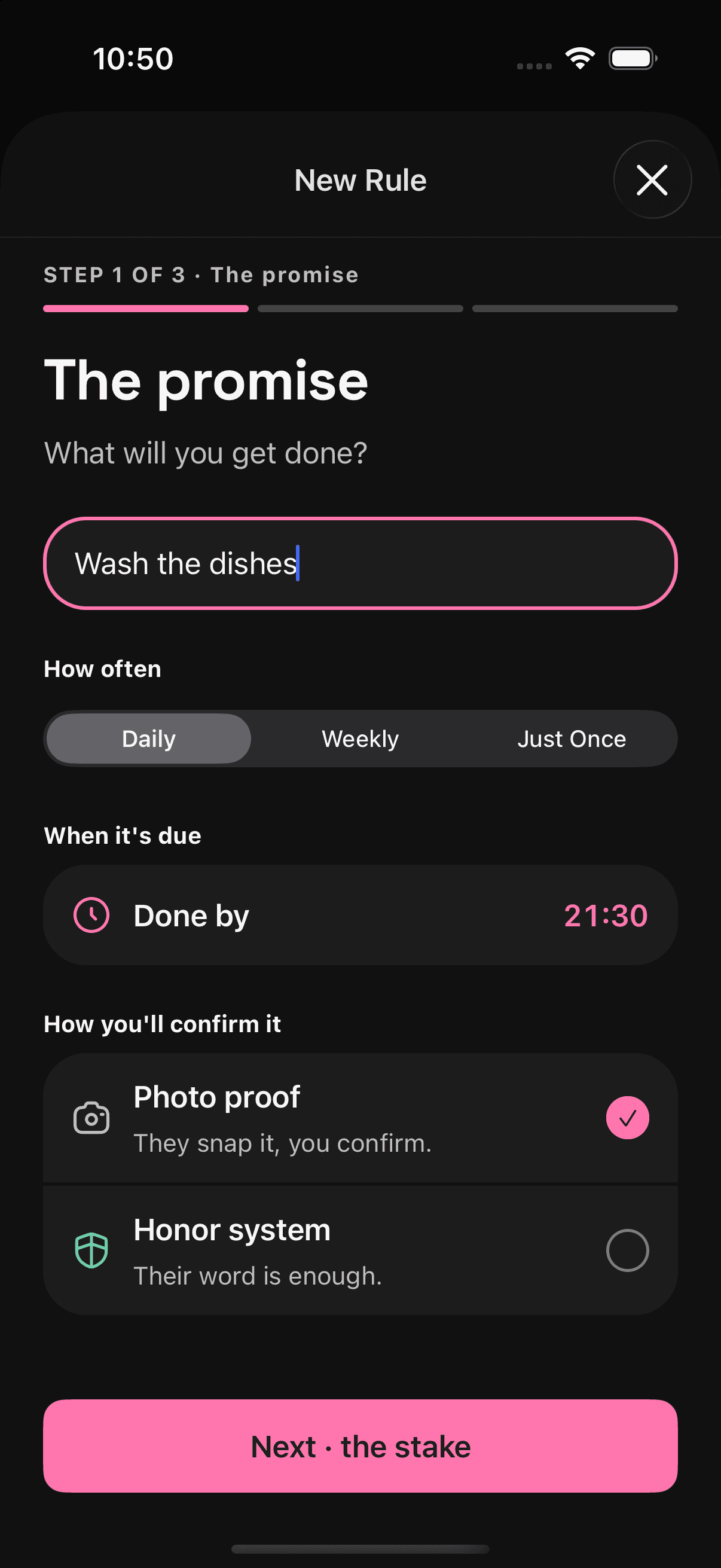
HerWay app - The Promise chore definition screen
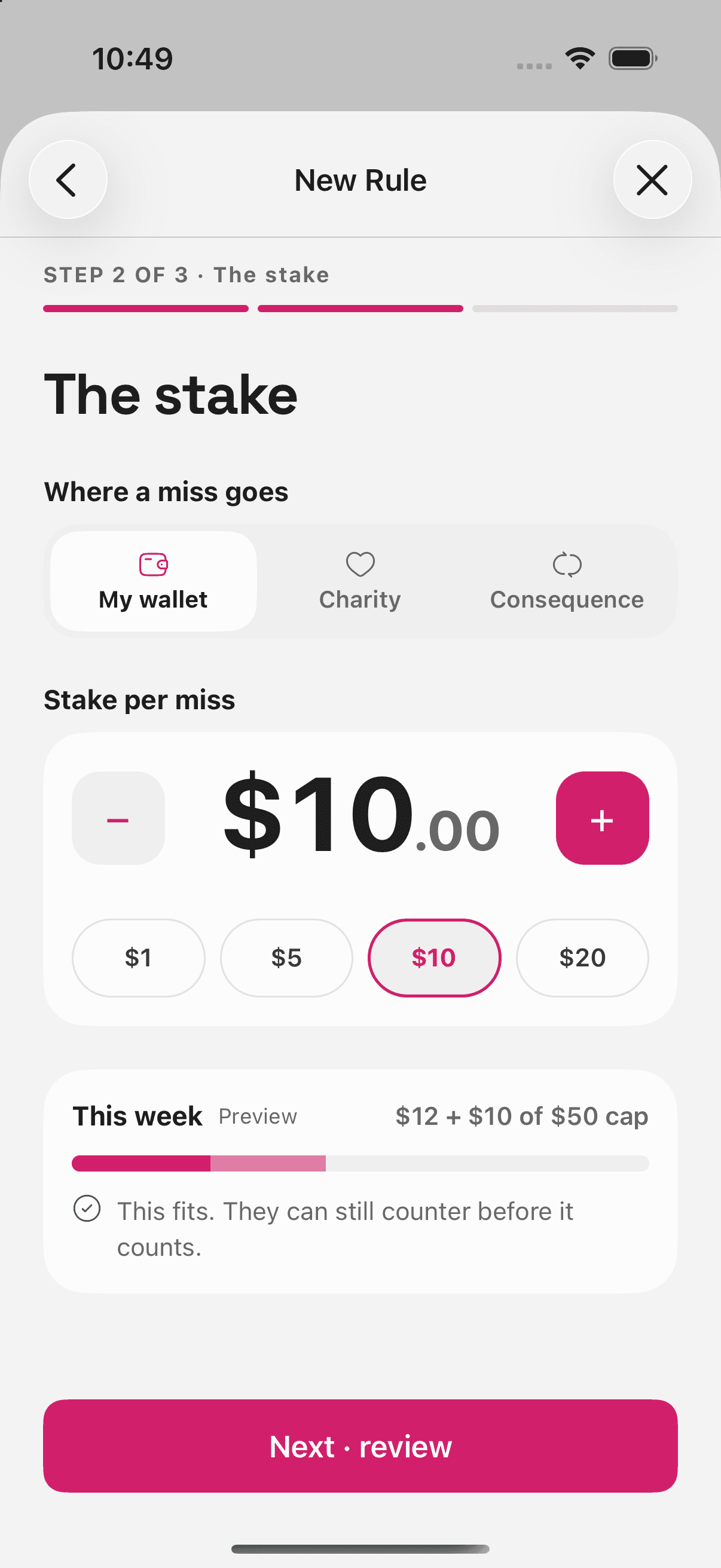
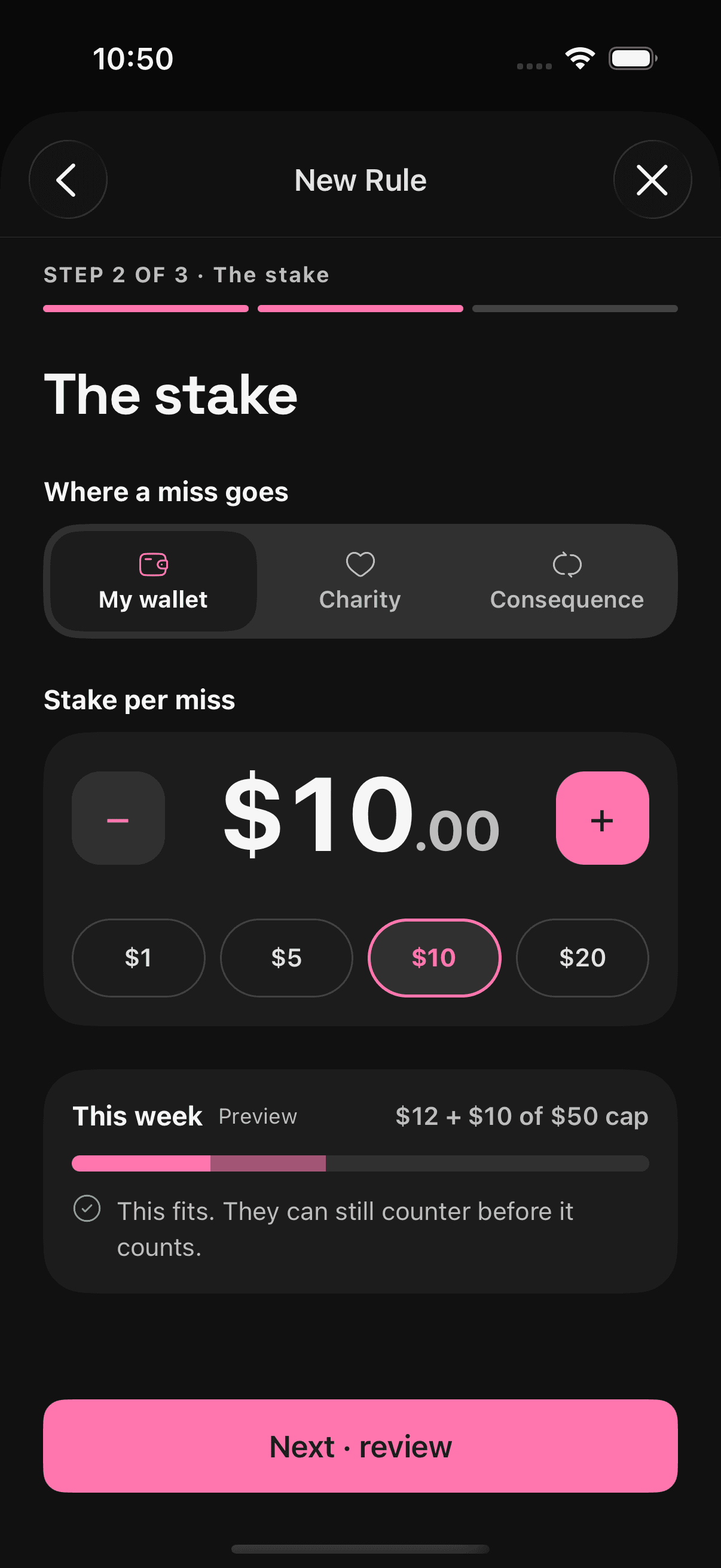
HerWay app - The Stake screen showing agreed amount and destination
HerWay app - Co-signed mutual agreement screen

Most arguments start with good intentions. Without a clear agreement, the same misunderstandings repeat.

With HerWay

  • Clear ownership
  • Automatic reminders
  • Shared responsibility
  • Visible follow-through
  • Mutual consent
  • Less mental load
  • Better habits
  • Agreed outcomes

Without HerWay

  • Constant reminders
  • Unequal mental load
  • Missed promises
  • Unclear ownership
  • Repeat arguments
  • Silent frustration
  • No follow-through
  • Last-minute panic
  • Defensiveness
  • One-sided effort

The reminder loop

The reminder should come from the app.

You agree on what needs doing. HerWay sends the reminder when it is due.

For the partner keeping track

One person remembers for two.

Keeping dates, deadlines, and unfinished promises in your head turns a shared responsibility into private work.

For the partner being reminded

Another reminder feels personal.

A simple follow-up can sound like criticism when it has to come from your partner again.

A neutral handoff

HerWay sends the reminder.

Once both partners agree, the app handles reminders and keeps follow-through visible to both of you.

Inside HerWay

Make the promise concrete.

HerWay turns everyday commitments into co-signed relationship agreements. Both partners see every detail upfront, and nothing becomes active until you both accept the terms.

  1. HerWay promise form with timing and completion options

    01

    Write the promise.

    Set what needs doing, when it is due, and how you will confirm it is done.

  2. HerWay screen for choosing an optional stake

    02

    Add an optional stake.

    Attach an agreed forfeit or consequence, or keep it consequence-free.

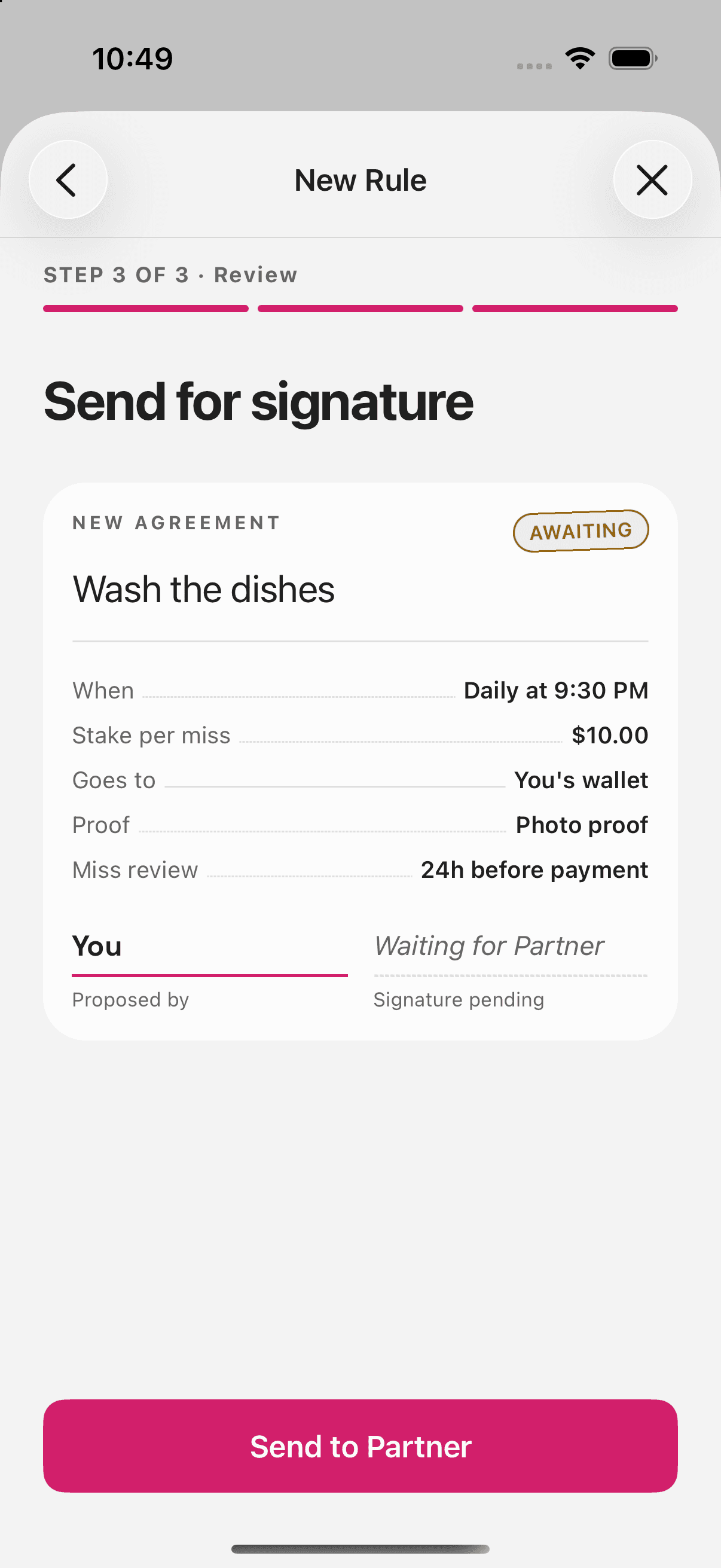
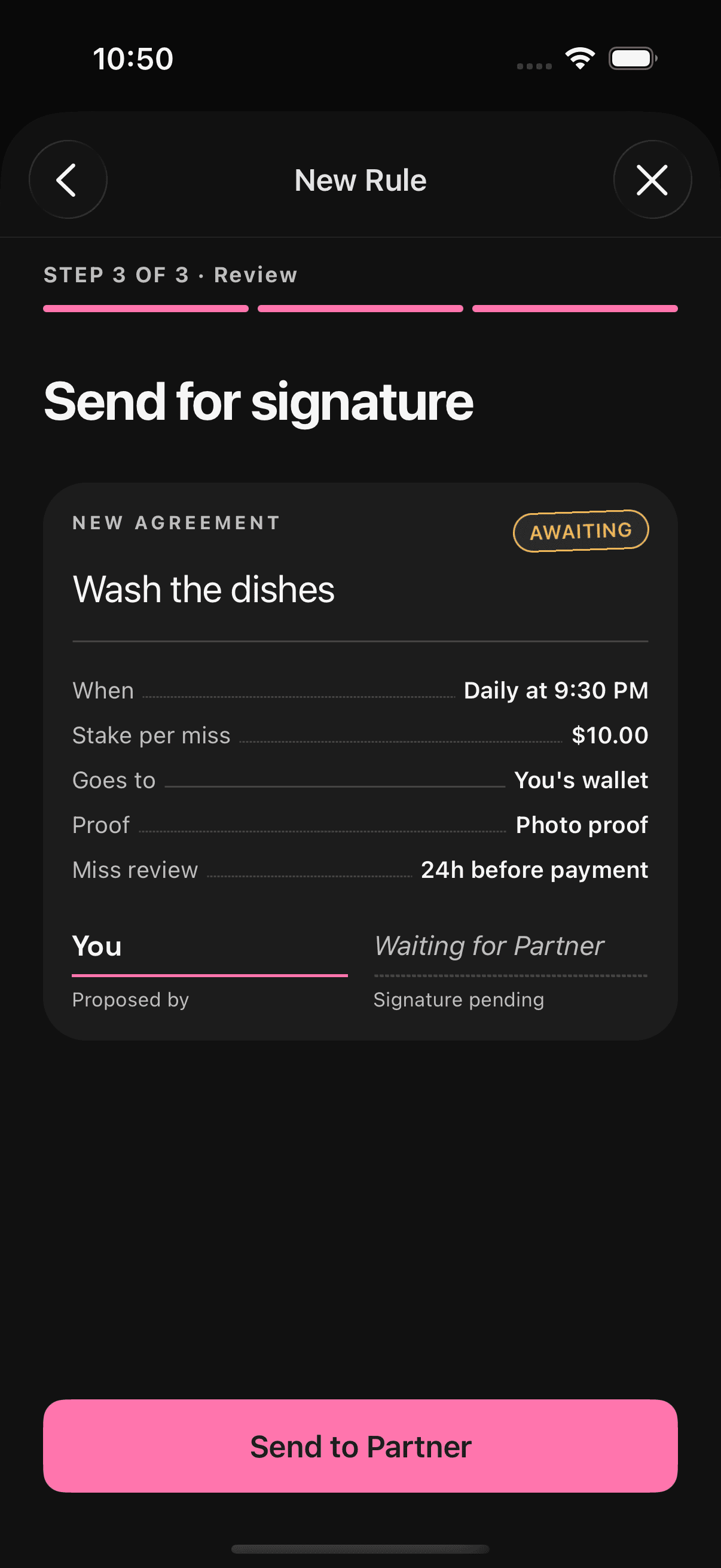
  3. HerWay agreement review screen awaiting a partner response

    03

    Review together.

    Your partner can accept, counter, or decline before anything becomes active.

One agreement, two perspectives

What each of you gets.

One person stops having to manage the reminders. The other gets clear expectations without surprise requests.

For the person creating it

Less mental load. Fewer reminders.

Mental load is the noticing, planning, and follow-up that can stay in one person's head. Put the plan into a shared agreement instead.

  1. Get it out of your head.

    The owner, deadline, and completion method live in one place.

  2. Stop sending reminders.

    HerWay sends the reminder when the deadline is close, so you don't have to.

  3. See the outcome without chasing.

    Check whether the agreement was kept or missed right in the app.

For the person owning the commitment

Clear expectations. Build better habits.

Agree to commitments you actually control, with clear timing and no shifting expectations.

  1. Have a say in the terms.

    Accept, counter, or decline before anything becomes active.

  2. Build consistency.

    Scheduled reminders keep the commitment on your radar before time runs out.

  3. Make your effort count.

    Mark it done and keep an undisputed record of commitments you completed.

Why we built HerWay

The fight that started HerWay.

One person remembered everything. The other thought, “You should have just asked.” HerWay began with a simple idea: agree on the plan together, then let the app handle the reminder.

Qudsia

Founder, HerWay

The invisible load71%of household mental-load tasks are carried by mothers
Still to remember
  • School pickupThu
  • Book the appointmentSoon
  • Plan date nightFriday
Built from lived experience

Make the agreement. Share the follow-through.

Clear terms first

Questions before you agree.

HerWay works because both partners understand the terms. Start with the questions couples usually ask before making their first agreement.

01What makes HerWay different from a shared to-do list?

A shared to-do list only records tasks. HerWay turns commitments into mutual agreements with clear ownership, automatic reminders, and proof of follow-through.

02Do both partners have to agree?

Yes. Both partners review the terms. The person reviewing can accept, counter, or decline; it only becomes active after both accept the same terms.

03What if my partner doesn't want to use it?

HerWay requires both partners to participate. If your partner declines a proposal, it never becomes active.

04Can we use HerWay without money?

Yes. Financial consequences are optional. You can agree on clear ownership, reminders, and follow-through without adding a financial stake.

05Can we change the terms later?

Both partners must approve any update. One person cannot change an active agreement on their own.

06Is HerWay for every kind of couple?

Yes. Any couple can use HerWay. You decide together who creates each agreement, who completes it, and which terms work for your household.

07How does HerWay handle my personal information?

For current information about website and beta data, retention, and privacy requests, see the Privacy Policy.

08How do I explain the mental load to my husband?

Start with the work behind the visible task: noticing, planning, remembering, and following up. Describe the pattern without turning it into a character judgment, then choose one recurring responsibility to make explicit in a shared agreement. Read the mental load conversation guide.

09What is weaponized incompetence?

Weaponized incompetence describes a repeated pattern where someone avoids learning or carrying a responsibility, leaving another person to take it back. Before using the label, check whether the expectation, standard, ownership, and capacity were actually clear. Read the fuller explanation.

10Is HerWay a chore app for couples?

HerWay can help couples agree on recurring chores, but it is more than a shared chore list. Each responsibility has an owner, timing, completion method, and mutual acceptance before it becomes active.

11How is HerWay different from a couples habit tracker?

A couples habit tracker usually records whether a habit happened. HerWay structures the agreement around who owns the commitment, what the terms are, when it is due, and what both partners accepted before the reminder starts.

12How do I stop reminding my partner?

Move the mechanical follow-up into a mutually accepted agreement: choose the owner, timing, completion method, and reminder behavior together. HerWay can send the reminder and keep the outcome visible, so you do not have to become the notification system.